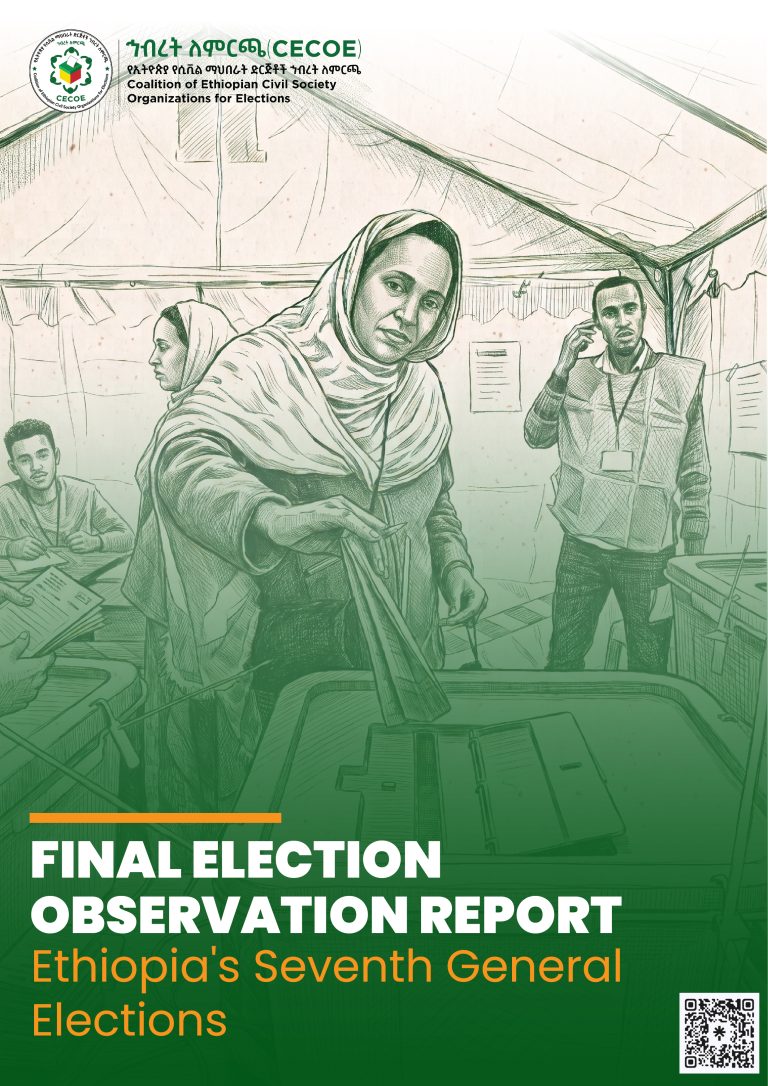
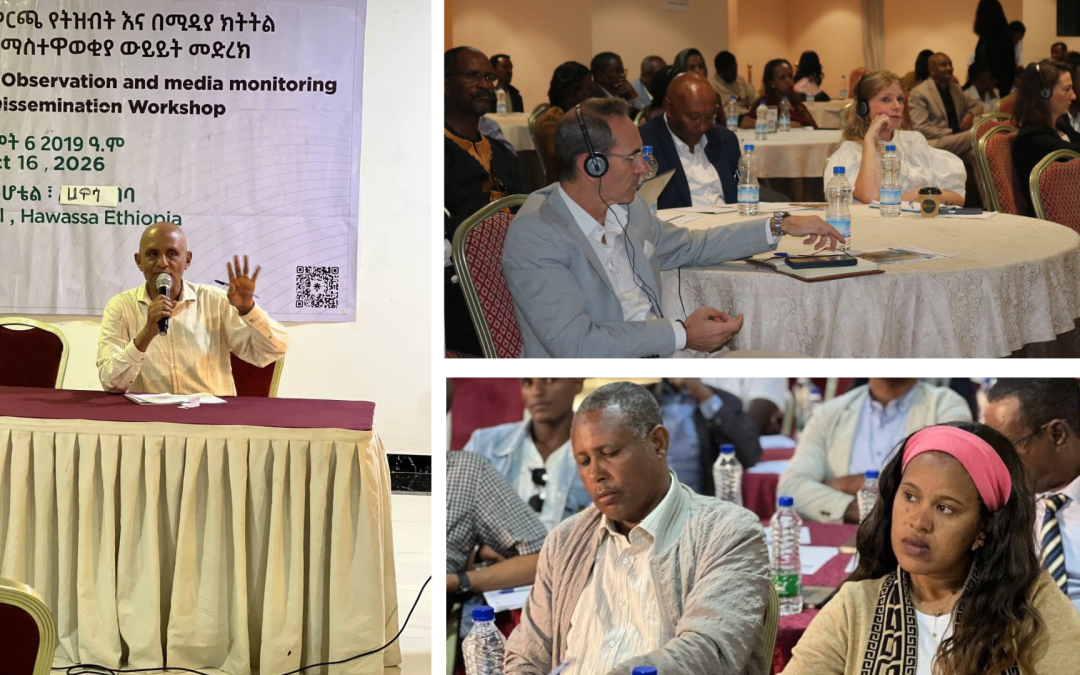
Over 90 leaders from government, political parties, CSOs, media, and international partners convene to translate systematic observation data into actionable electoral reforms.
ADDIS ABABA, ETHIOPIA – October 2026 – Following the conclusion of its systematic citizen observation mission for the 7th General Election, the Coalition of Ethiopian Civil Society Organizations for Elections (CECOE) successfully organized a series of three Findings Dissemination Workshops in Adama (Oct 13), Hawassa (Oct 16), and Addis Ababa (Oct 19, 2026). Supported by the French Embassy, the workshops brought together 94 key stakeholders to review comprehensive electoral data, examine media monitoring reports, and discuss key legal and operational recommendations to enhance democratic accountability and electoral integrity in Ethiopia.
Fostering Evidence-Based Dialogue
Recognizing that the ultimate impact of election observation relies heavily on transparent, timely, and impartial reporting, CECOE designed these workshops to move beyond standard technical reporting. The primary objective was to foster evidence-based dialogue among core decision-makers, electoral authorities, political actors, and civil society, creating a collaborative platform to translate systematic observation findings into actionable policy and administrative reforms.
Across the three regional sessions, the workshops engaged a broad cross-section of 94 key opinion-shapers and leaders, including:
- Media Representatives: Over 60 journalists and media professionals participated across the events, including 27 media personnel in Adama and key broadcast representatives in Addis Ababa.
- Political Parties & Joint Council: Leaders from registered political parties—such as the Prosperity Party (PP), EZEMA, GOGOT, Renaissance Party, and others—alongside central and regional leadership from the Inter-Party Joint Council (PPJC) and its Women’s Wing.
- Electoral & Government Institutions: Officials from the National Election Board of Ethiopia (NEBE), the Authority for Civil Society Organizations (ACSO), the Ministry of Justice, and the Ethiopian Federal Police (EFP).
- Civil Society Organizations: Delegates from over a dozen CSOs, including CCRDA, CEHRO, CARD, EHRCO, TIMRAN, ELSA, and ENDAN.
- International Partners: Representatives from international organizations and diplomatic missions, including the European Centre for Electoral Support (ECES), the Netherlands Institute for Multiparty Democracy (NIMD), GIZ, and the British Embassy.
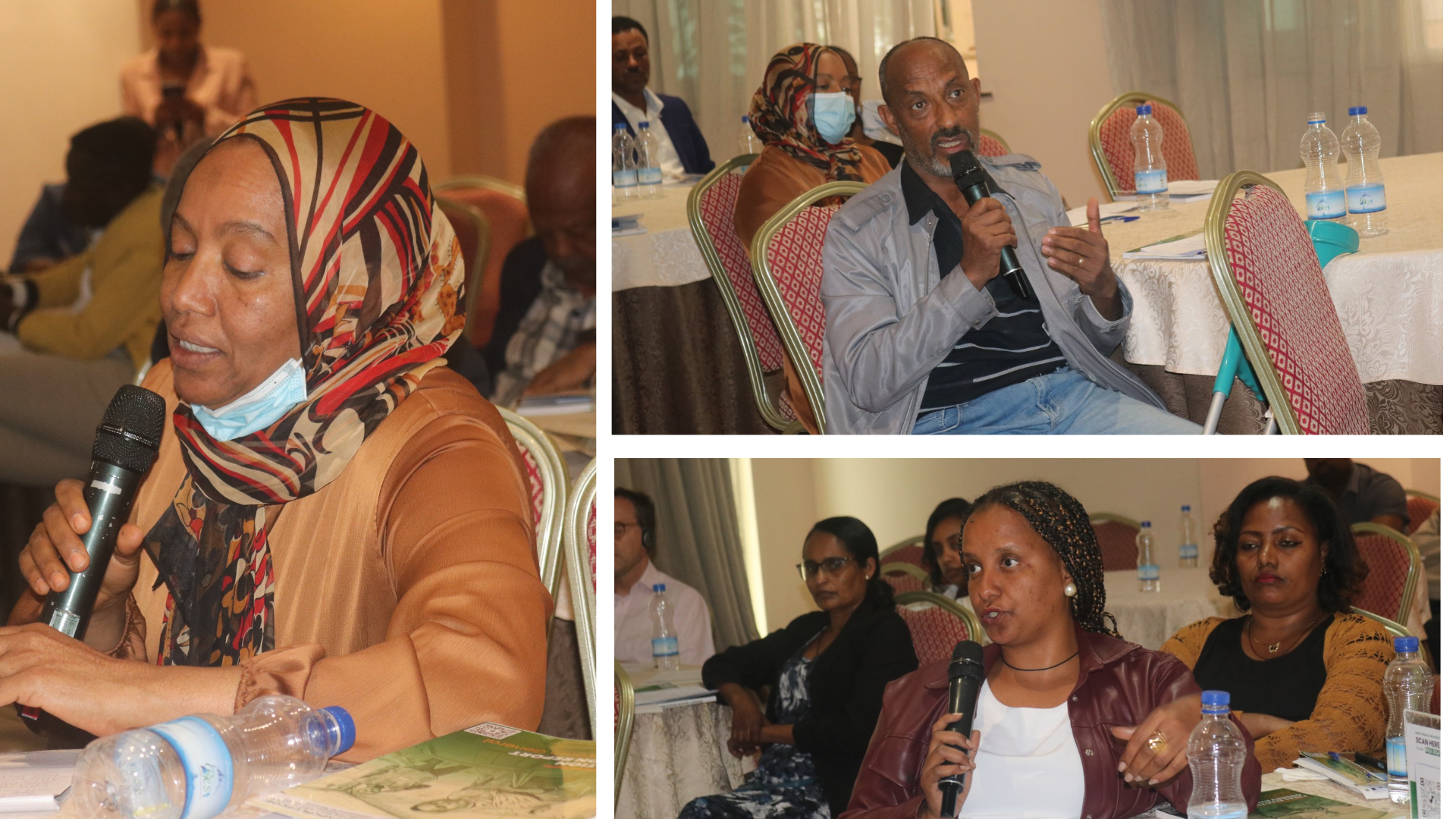
Key Insights from Systematic Observation & Media Monitoring
During the presentation sessions, CECOE outlined its nationwide deployment scale and presented key empirical findings covering the entire electoral cycle:
Deployment Scale & Operational Reach
CECOE mobilized 101 out of its 190 member CSOs (a >53% participation rate) to deploy community-based observers. The mission fielded 522 Long-Term Observers (LTOs)—one per constituency outside Tigray—who submitted 6,072 bi-weekly reports tracking voter education, security, civic space, and campaign dynamics. On Election Day, a core corps of 2,506 stationary observers and mobile roving teams monitored 7,723 polling stations across the country, representing 15% of all NEBE-established polling sites.
Pre-Election & Polling Day Trends
Field observations revealed a historic 95% turnout among 54 million registered voters and prompt station opening, with 98% of monitored stations operational by 7:00 AM equipped with complete materials and staff. Polling station physical accessibility for persons with disabilities reached 94% (a substantial improvement compared to 12% observed during manual voter registration).
However, critical operational challenges were highlighted:
- Station Capacity Strains: Polling station ceilings capped at 1,500 voters created severe queues, leading NEBE to extend voting by six hours until midnight and forcing counting to take place late at night under worker exhaustion.
- Irregularities: Observers documented ballot secrecy breaches at 169 stations, repeat unauthorized voter assistance at 87 stations, official ballot marking at 77 stations, and uncounted ballot box removals to military/administrative facilities at 59 stations.
- Campaign Disparities: Campaign spending was heavily skewed due to delayed state funding releases, while government resource misuses (such as official vehicles used for campaign purposes) were recorded in 112 observer reports.
Media Monitoring Findings
Implemented in partnership with the European Centre for Electoral Support (ECES), the Media Monitoring Unit (MMU) tracked 82 debate broadcasts across 5 languages and analyzed social media activities across 22 political parties. The findings demonstrated strong broadcast compliance with campaign silence rules and recorded 0% actionable identity-based hate speech or ethnic incitement during televised broadcasts. Nevertheless, key disparities remained: Amharic dominated 77.2% of debate broadcasts, the ruling Prosperity Party accounted for 84.6% of nationwide debate participation, and unverified claims spread rapidly on social media, emphasizing the need for enhanced real-time fact-checking.
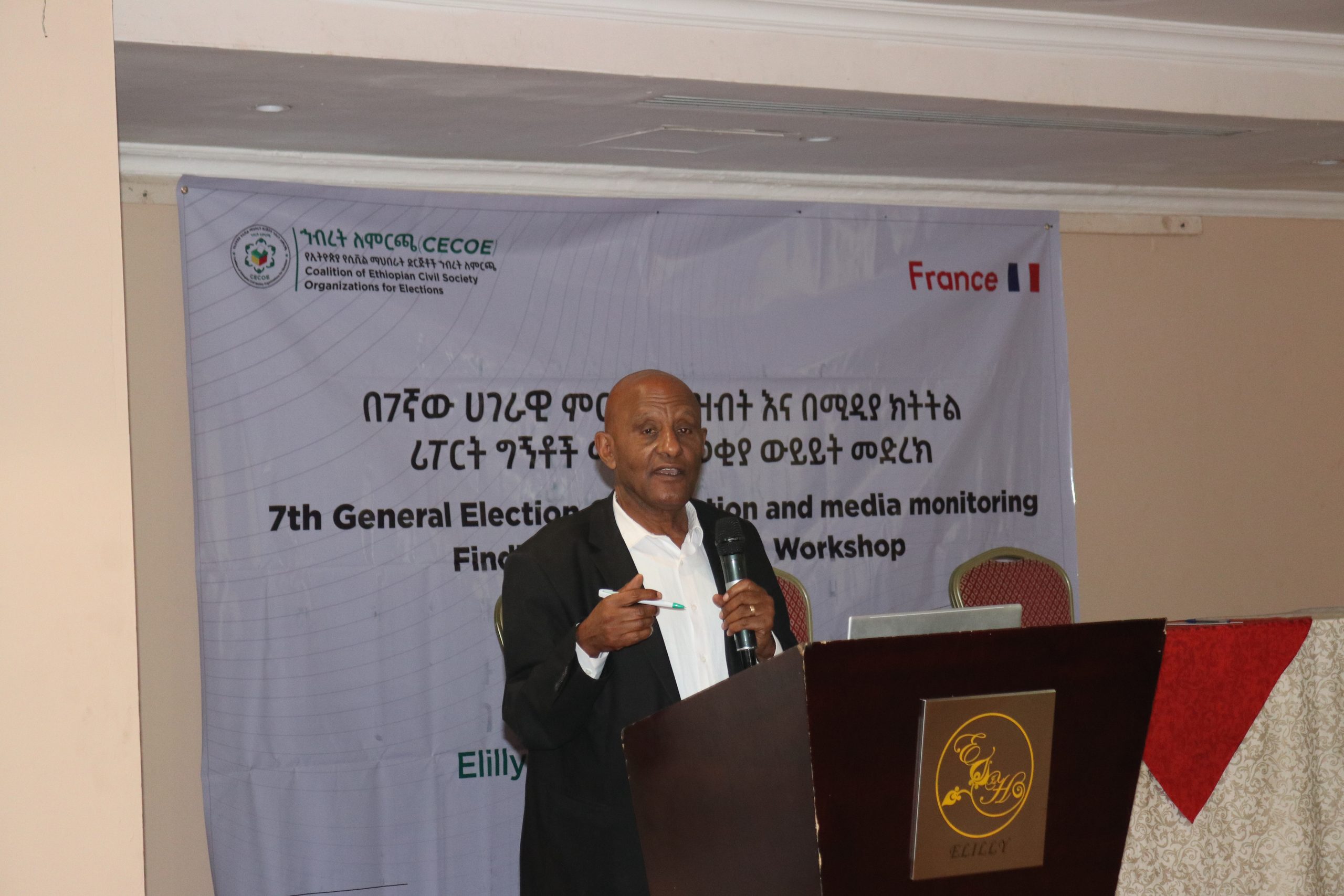
Actionable Recommendations for Electoral Reform
To address documented vulnerabilities and strengthen future democratic processes, CECOE presented a comprehensive suite of actionable recommendations:
Election Administration & Operations
- Downsize Polling Station Ceilings: Reduce station ceilings from 1,500 to 500–700 voters per station, aligning with regional standards (e.g., Kenya, Ghana, Botswana) to eliminate midnight voting extensions, curb poll worker exhaustion, and ensure daylight counting.
- Transition to Continuous Voter Registration (CVR): Replace costly periodic nationwide voter registration drives with a permanent, year-round master roll integrated with national digital identification initiatives (such as Fayda).
- Grant Observer Portal Access: Provide accredited citizen observer groups with read-only backend access to digital administrative portals to independently verify operational disputes.
Dispute Resolution & Legal Framework
- Lower Evidentiary Thresholds: Amend regulations so petitions are not automatically dismissed over missing standardized station forms; permit alternative evidence, such as witness testimonies, when observers or agents are unlawfully evicted.
- Publish Complaint Records: Mandate that NEBE publish accessible records documenting all formal complaint resolutions, administrative sanctions, and criminal referrals.
- Conflict-Sensitive Party Registration: Temporarily relax signature thresholds for national political parties during verified security crises or active conflict zones to prevent unfair disqualifications.
Inclusion & Gender Equity
- Advance Women into Station Leadership: Establish explicit hiring targets and affirmative action quotas to elevate female poll workers into station head positions (up from 26%).
- Standardize Accessibility Protocols: Mandate tactile ballot templates, magnifying tools, low voting booths, Braille guides, and sign language interpreters across all voter registration and polling sites.
Campaign Finance & Political Playing Field
- Enact Campaign Spending Caps: Enforce statutory campaign spending limits, establish transparent channels for grassroots crowdfunding, and strictly maintain bans on foreign funding to balance political competition.
- Institutionalize the Joint Council: Legally institutionalize and expand the Inter-Party Joint Council (PPJC) to regional and local levels to serve as an ongoing dialogue platform.
Media Access & Information Integrity
- Protect Public Media Time: Codify free airtime allocation lotteries in law and reserve guaranteed state broadcast slots for NEBE and accredited CSOs to broadcast voter education in local languages.
- Upgrade Multi-Platform Monitoring: Modernize tracking technology across broadcast, print, and online channels to safeguard campaign equity and counter digital disinformation.
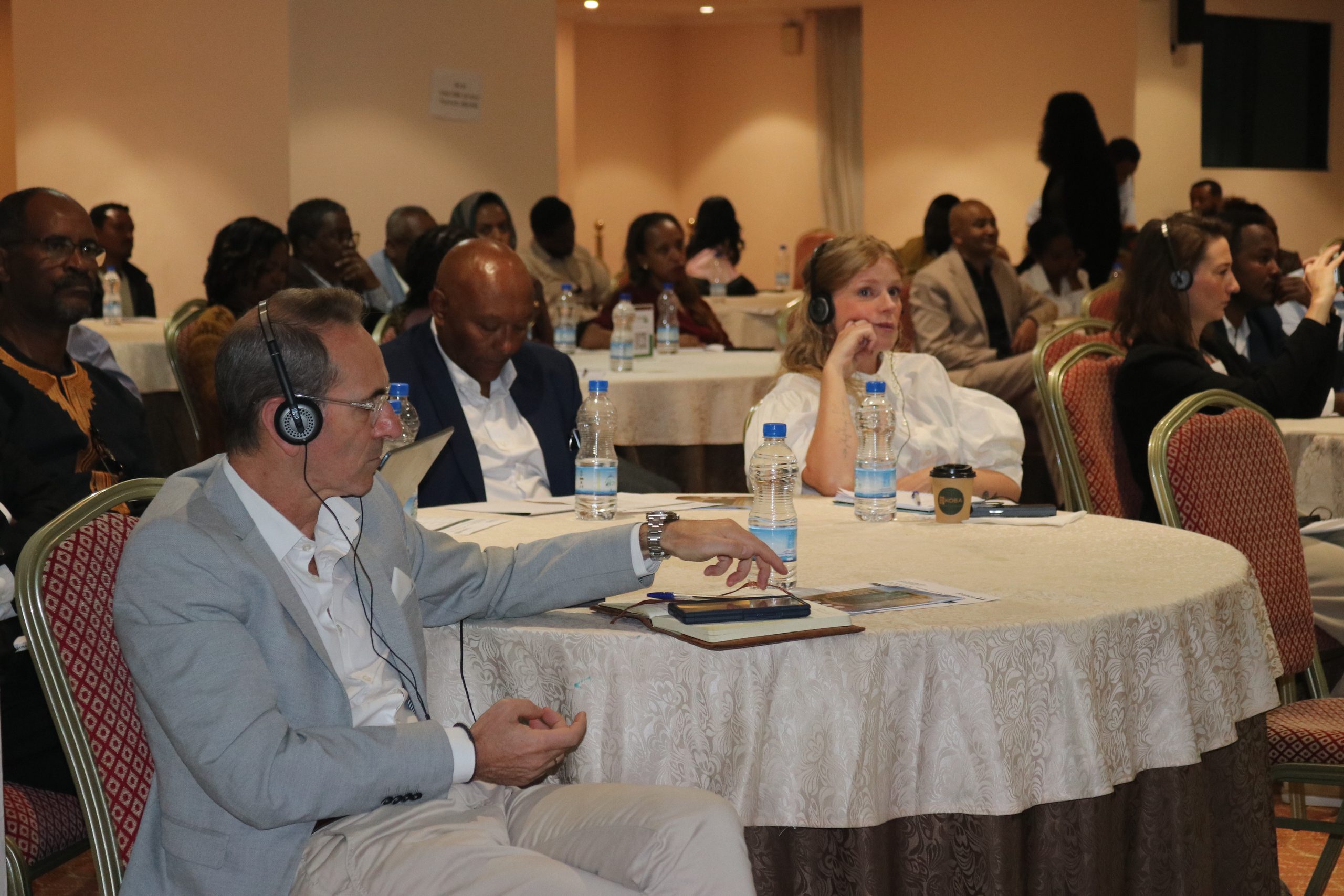
Plenary Perspectives & Lessons Learned
The interactive Q&A sessions in Adama, Hawassa, and Addis Ababa generated rich debate among participants:
- Stakeholder Discussions: Attendees examined the operational trade-offs of lowering polling station voter caps (noting potential logistical challenges for political parties fielding agents across more sites), unutilized campaign airtime by political parties, the necessity of a national population census for accurate boundary delimitation, and mechanisms to guarantee observer non-partisanship.
- Direct Political Engagement: Representatives from the Inter-Party Joint Council's Women's Wing urged direct field interviews with female candidates and called for continuous, year-round voter education rather than seasonal campaigns.
- Format & Methodological Refinements: Recognizing logistical delays and audience fatigue experienced during the roadshow, CECOE committed to restructuring future dissemination workshops. Future events will cap presentation delivery at 40% of agenda time, prioritize guided discussion groups, adopt visual data formats (such as infographics and short policy briefs), publish reports in local languages (including Amharic), and clearly explain citizen observation methodologies at the outset.
Conclusion & Moving Forward
The Findings Dissemination Workshops marked a major milestone in transforming election observation data into constructive stakeholder engagement. As a non-partisan coalition representing over 190 civil society organizations, CECOE remains dedicated to safeguarding democratic processes, defending voter rights, and fostering institutional transparency across Ethiopia.
CECOE calls upon government authorities, NEBE, political parties, media institutions, and international partners to collaborate in implementing these vital recommendations to strengthen electoral integrity and build public trust in future democratic cycles.